









EBOLA Should You Be Worried?

Ebola Virus: Should You Be Worried?
Symptoms, Transmission, Prevention & Current Risk Explained
When news of an Ebola outbreak appears in headlines, many people immediately wonder:
Could this become the next global health emergency?
The word Ebola often evokes images of healthcare workers in full protective gear, emergency response teams, quarantines, and alarming mortality statistics. Because Ebola has been responsible for some of the world's deadliest infectious disease outbreaks, public concern is understandable.
Yet despite its frightening reputation, Ebola is also one of the most misunderstood infectious diseases.
Many people ask:
Recent headlines have once again placed Ebola in the global spotlight. In 2026, health authorities have been responding to an Ebola outbreak involving the Bundibugyo strain of Ebola virus in parts of Central and East Africa. While the outbreak remains serious for affected communities, public health experts continue to emphasize that the overall risk to most people outside outbreak regions remains very low.
The reality is more nuanced than many headlines suggest.
While Ebola Virus Disease (EVD) remains one of the world's most serious infectious diseases, understanding the facts—not the fear—is the key to making informed decisions about health, travel, preparedness, and infection prevention.
What Is Ebola?
Ebola Virus Disease (EVD) is a severe viral illness caused by infection with the Ebola virus.
The virus belongs to the filovirus family and can cause widespread damage to multiple organs and body systems. In severe cases, Ebola infection can lead to organ failure, shock, severe dehydration, internal bleeding, and death.
Ebola was first identified in 1976 during simultaneous outbreaks in what is now the Democratic Republic of the Congo and Sudan. The disease was named after the Ebola River located near one of the original outbreak areas.
Since its discovery, Ebola has become one of the most closely monitored emerging infectious diseases in the world.
Origins of Ebola
Scientists believe Ebola originated in animals before spreading to humans.
Current evidence suggests certain species of fruit bats may serve as natural reservoirs of the virus. Human infections can occur through contact with infected wildlife, including:
- Fruit bats
- Monkeys
- Chimpanzees
- Gorillas
- Forest antelope
Once the virus enters a human population, person-to-person transmission can sustain an Ebola outbreak.
Ebola Outbreak History
1976: The First Ebola Outbreaks
The first known Ebola outbreaks established the virus as a serious public health threat.
1995–2012: Multiple Regional Outbreaks
Several outbreaks occurred throughout Central Africa, helping researchers better understand Ebola transmission and outbreak management.
2014–2016 West Africa Outbreak
The largest Ebola outbreak in history occurred across Guinea, Liberia, and Sierra Leone.
Recent Ebola Outbreaks
Smaller outbreaks have continued to occur, primarily in Central and East Africa.
More than 28,000 cases were reported during the 2014–2016 West Africa outbreak, resulting in over 11,000 deaths.
This outbreak fundamentally changed how the world approaches epidemic preparedness and outbreak response.
Fortunately, advances in diagnostics, vaccines, treatment protocols, and outbreak response systems have significantly improved public health readiness.
Why Is Ebola Considered So Dangerous?
Severe Symptoms
Unlike many viral illnesses, Ebola can rapidly progress into a severe systemic disease affecting multiple organs.
High Fatality Rates
Historically, Ebola mortality rates have ranged between 25% and 90%.
Healthcare Challenges
Outbreaks often occur in regions with limited healthcare infrastructure, making containment more difficult.
Global Public Health Concern
Even relatively small Ebola outbreaks receive international attention because of the disease's severity and potential humanitarian impact.
Historically, Ebola mortality rates have ranged between 25% and 90%, depending on:
- Virus strain
- Healthcare access
- Outbreak conditions
- Availability of treatment
How Does Ebola Spread?
One of the most searched questions online is:
How does Ebola spread?
Ebola transmission occurs primarily through direct contact with infected bodily fluids.
These include:
- Blood
- Vomit
- Diarrhea
- Saliva
- Sweat
- Urine
- Breast milk
- Semen
Transmission can occur when these fluids enter another person's:
- Eyes
- Nose
- Mouth
- Broken skin
Contaminated Surfaces
The Ebola virus may also spread through contaminated objects such as:
- Needles
- Medical equipment
- Bedding
- Clothing
Healthcare Settings
Healthcare workers face elevated risk because they may come into close contact with infectious bodily fluids while treating patients.
Is Ebola Airborne?
This remains one of the most common Ebola-related questions.
Current scientific evidence indicates that Ebola is not considered an airborne disease under normal real-world conditions.
Unlike diseases such as:
- Measles
- Tuberculosis
- COVID-19
Ebola does not typically spread through microscopic aerosol particles that remain suspended in the air over long distances.
Instead, Ebola transmission generally requires direct exposure to infectious bodily fluids.
This distinction is critically important because airborne diseases spread much more easily through casual contact.
Can Ebola Spread Through Coughing?
A related question often asked is:
Can Ebola Spread Through Coughing?
While droplets containing bodily fluids could theoretically expose someone at very close range, this is not considered airborne transmission.
Ebola does not spread efficiently through casual respiratory exposure in the way influenza, COVID-19, or measles can.
The overwhelming majority of Ebola infections occur through direct contact with infectious bodily fluids.
Ebola Symptoms
Recognizing Ebola symptoms early can significantly improve outcomes.
Early Ebola Symptoms
Initial symptoms often resemble many other common infectious illnesses.
- Fever
- Severe fatigue
- Muscle pain
- Headache
- Weakness
- Sore throat
Because these symptoms are non-specific, early Ebola infection can be difficult to identify without considering travel history and potential exposure.
Advanced Ebola Symptoms
As Ebola virus disease progresses, symptoms may become much more severe.
- Vomiting
- Severe diarrhea
- Abdominal pain
- Dehydration
- Organ dysfunction
- Internal bleeding
- External bleeding in some cases
Not every Ebola patient develops hemorrhagic symptoms despite the common term "Ebola hemorrhagic fever."
Timeline of Progression
Symptoms typically appear:
2 to 21 days after exposure
Most infected individuals develop symptoms within:
8 to 10 days
Anyone who develops symptoms after potential exposure should seek immediate medical evaluation.
Ebola Mortality Rate and Survival Rate
How Deadly Is Ebola?
Ebola remains one of the deadliest viral diseases known to medicine.
- Fatality rates have ranged between 25% and 90%
- Average outbreak mortality rates often approach 50%
These figures explain why Ebola continues to attract significant public attention whenever outbreaks occur.
Why Survival Rates Are Improving
Modern medicine has significantly improved Ebola survival rates.
Earlier Diagnosis
Rapid testing allows faster intervention.
Better Supportive Care
Modern treatment focuses on intravenous fluids, electrolyte replacement, oxygen support, and organ support.
Improved Outbreak Response
Contact tracing and early isolation reduce transmission and improve patient outcomes.
Advances in Therapeutics
New antibody-based therapies have improved survival compared with previous outbreaks.
Ebola Treatment
Can Ebola Be Treated?
Yes.
Although there is no instant cure for Ebola infection, treatment options have improved dramatically.
Current Ebola treatment may include:
- Intensive supportive care
- Monoclonal antibody therapies
- Fluid replacement
- Electrolyte correction
- Oxygen therapy
- Treatment of secondary infections
Patients who receive early medical care generally experience better outcomes.
Ebola Vaccine
Is There an Ebola Vaccine?
Yes.
Several Ebola vaccines have been developed successfully against certain Ebola virus species, particularly the Zaire strain that caused the devastating West Africa epidemic.
Vaccination has become one of the most important tools in outbreak control.
Vaccination efforts often focus on:
- Healthcare workers
- Close contacts
- Outbreak response teams
- High-risk populations
However, the current 2026 outbreak involves the Bundibugyo strain of Ebola virus, for which there is not yet an approved vaccine. Researchers are actively evaluating multiple vaccine candidates and treatment options to improve future outbreak response capabilities.
Current Ebola Outbreak Update (2026)
Although many people think of Ebola as a disease from past headlines, Ebola outbreaks still occur today.
In 2026, health authorities in the Democratic Republic of the Congo (DRC) confirmed a significant Ebola outbreak involving the Bundibugyo strain of Ebola virus. Cases have also been identified in neighboring Uganda, prompting increased surveillance and international response efforts.
Why This Outbreak Is Different
Most major Ebola outbreaks have involved the Zaire strain.
The current outbreak involves the less common Bundibugyo strain, creating additional challenges for researchers and public health officials.
Because there is currently no approved vaccine specifically licensed for Bundibugyo virus disease, researchers are rapidly evaluating vaccine candidates and therapeutic treatments.
Challenges Facing Outbreak Control
Containing Ebola is never simply a medical challenge.
The current outbreak involves factors such as:
- Cross-border movement
- Remote communities
- Limited healthcare infrastructure
- Humanitarian challenges
- Public mistrust
- Difficult access to testing and treatment
These realities can complicate contact tracing, patient isolation, and outbreak containment efforts.
What Does This Mean for the Rest of the World?
This is where perspective becomes important.
While the outbreak represents a serious public health emergency for affected communities, international health agencies continue to assess overall global risk as relatively low.
Because Ebola spreads through direct contact rather than efficient airborne transmission, widespread international spread remains far less likely than highly transmissible respiratory diseases.
For people living outside outbreak regions, awareness and informed monitoring remain appropriate responses.
Panic is not.
Ebola vs COVID-19
The COVID-19 pandemic led many people to compare Ebola and COVID-19.
While both are viral diseases, they differ dramatically.
| Factor | Ebola | COVID-19 |
|---|---|---|
| Primary Transmission | Direct contact with bodily fluids | Respiratory droplets and aerosols |
| Airborne Spread | No | Yes |
| Mortality Rate | Much higher | Much lower |
| Ease of Transmission | Lower | Higher |
| Geographic Spread | Usually localized | Global pandemic |
Ironically, Ebola is generally far deadlier per infection, but COVID-19 spreads much more efficiently due to airborne transmission.
Should You Actually Be Worried?
The answer depends largely on your circumstances.
General Public
For most people outside active outbreak regions, the risk remains extremely low.
Travelers
Travelers should monitor official health advisories and follow local public health guidance when visiting affected areas.
Healthcare Workers
Healthcare personnel caring for Ebola patients face elevated risk and require specialized training and personal protective equipment.
Individuals Outside Outbreak Regions
The overwhelming majority of people living outside outbreak areas face minimal risk of exposure.
The current Ebola outbreak has understandably renewed public concern, but public health experts continue to stress that Ebola's transmission characteristics make widespread international spread far less likely than highly transmissible airborne diseases.
What Public Health Experts Recommend
Stay Informed
Follow updates from trusted health authorities.
Practice Good Hygiene
Hand hygiene remains one of the most effective infection prevention strategies.
Follow Travel Guidance
Review travel advisories before international travel.
Respect Public Health Recommendations
Evidence-based public health measures help reduce risk and protect communities.
The Bigger Lesson from Ebola
Ebola outbreaks remind us that infectious diseases can emerge unexpectedly and spread rapidly when communities are unprepared.
Preparedness is not about fear.
Preparedness is about readiness.
The ongoing Ebola outbreak also demonstrates how interconnected the modern world has become. A disease outbreak that begins in a remote region can quickly become an international concern through travel, migration, and trade.
Public health preparedness includes:
- Staying informed
- Understanding transmission risks
- Practicing infection prevention
- Following evidence-based guidance
- Supporting strong public health systems
- Maintaining appropriate protective equipment before emergencies occur
Whether the threat is Ebola, COVID-19, influenza, RSV, or another emerging infectious disease, preparation remains one of the most effective tools available.
Frequently Asked Questions (FAQ)
Is Ebola airborne?
No. Current scientific evidence indicates Ebola is not an airborne disease under normal conditions.
Can Ebola spread through coughing?
Direct exposure to infectious droplets may pose risk at very close range, but Ebola does not spread like airborne respiratory viruses.
Can Ebola spread through the air?
No. Ebola primarily spreads through direct contact with infected bodily fluids.
What are the first symptoms of Ebola?
Fever, fatigue, headache, muscle pain, weakness, and sore throat are common early symptoms.
Is Ebola worse than COVID-19?
Ebola is generally far deadlier per infection, while COVID-19 spreads much more easily due to airborne transmission.
Is there an Ebola vaccine?
Yes. Vaccines exist for certain Ebola strains, although vaccine development continues for other species such as Bundibugyo virus.
Can Ebola be treated?
Yes. Modern supportive care and advanced therapies have significantly improved survival rates.
Is Ebola in the United States?
Occasional imported cases have occurred historically, but sustained community transmission has not been established.
How deadly is Ebola?
Fatality rates have historically ranged between 25% and 90%, depending on outbreak conditions and access to care.
How likely is an Ebola outbreak outside Africa?
Large outbreaks outside affected regions remain unlikely because of surveillance systems, rapid response capabilities, and Ebola's mode of transmission.
Conclusion
While Ebola remains one of the world's most serious infectious diseases, most people outside outbreak regions face extremely low risk.
The disease deserves respect, continued monitoring, and strong public health preparedness. However, understanding how Ebola actually spreads helps separate scientific reality from unnecessary fear.
Awareness—not panic—is the most effective response.
By staying informed, following public health guidance, and maintaining sensible preparedness habits, individuals can respond confidently to emerging infectious disease headlines without falling victim to misinformation or unnecessary alarm.
Preparedness Starts Before Headlines Appear
One of the biggest lessons from Ebola, COVID-19, SARS, influenza outbreaks, and other emerging infectious diseases is that preparation is always easier before an emergency begins.
Public health experts consistently emphasize the importance of infection awareness, personal preparedness, and having reliable protective equipment available when needed.
While Ebola itself is not considered an airborne disease, recent years have shown that respiratory viruses, seasonal illnesses, travel-related exposures, and future emerging infectious diseases can create situations where respiratory protection becomes an important part of a personal preparedness strategy.
That's why many people continue to keep high-quality respiratory protection available as part of their everyday preparedness plans.
BOTN KF94 vs BLUE KF94 vs POSH KF94: Which Korean Face Mask Is Right for You?
When it comes to KF94 masks, one size does not fit all.
Every face shape, lifestyle, and personal preference is different. Some people prioritize the most secure fit possible. Others want maximum comfort for all-day wear. And many want a mask that offers both protection and style.
That's why three of the most popular Made in Korea KF94 face masks—BOTN KF94, BLUE KF94, and POSH KF94—have earned loyal followings among mask users worldwide.
Whether you're looking for a Korean face mask for travel, a KF94 mask for work, a comfortable mask for daily wear, or a stylish protective face mask, there's a perfect option for you.
BOTN KF94: Premium Fit, Adjustable Comfort, and Reliable Protection
For many mask enthusiasts, BOTN KF94 has long been considered one of the gold standards among Korean KF94 masks.
BOTN was designed around one core principle: creating a highly customizable fit that works for a wide variety of face shapes.
Unlike many disposable masks with fixed ear loops, BOTN features its signature adjustable ear loop system, allowing users to fine-tune the fit for improved comfort and a better facial seal.
BOTN KF94 Features
- Adjustable ear loops for a personalized fit
- Spacious 3D boat-style structure
- Strong nose wire for enhanced seal
- Reduced glasses fogging
- Comfortable for extended wear
- High breathability
- Available in multiple colors
- Available in multiple sizes
- Individually wrapped for hygiene and convenience
- Made in Korea
Many users choose BOTN because they want:
- A secure-fitting KF94 mask
- A mask for larger or smaller face shapes
- A comfortable mask for work and travel
- A premium Korean face mask
- A high-quality disposable face mask
- A KF94 mask with adjustable ear loops
BLUE KF94: Lightweight, Breathable, and Exceptionally Comfortable
If BOTN focuses on fit, BLUE focuses on comfort.
BLUE KF94 masks have become a favorite among users looking for a lightweight face mask that feels almost invisible during daily wear.
BLUE KF94 Features
- Lightweight design
- Soft and comfortable ear loops
- Excellent breathability
- Low breathing resistance
- Comfortable for long workdays
- Strong adjustable nose bridge
- Secure facial fit
- Individually wrapped
- Made in Korea
- KF94-certified filtration efficiency
Many users choose BLUE because they want:
- A lightweight Korean face mask
- A comfortable KF94 mask for all-day wear
- A breathable disposable face mask
- A mask for office environments
- A mask for school and university
- A mask for long flights and travel
POSH KF94: Fashion, Comfort, and Protection Combined
Protection doesn't have to be boring.
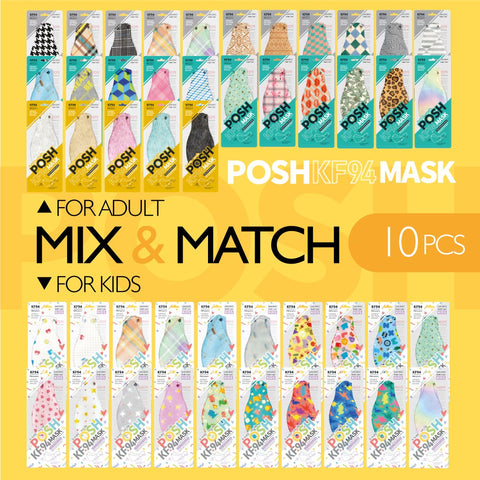
POSH KF94 masks combine premium Korean KF94 protection with stylish colors, fashionable patterns, and everyday comfort.
POSH KF94 Features
- Stylish colors and fashionable patterns
- Adjustable ear loops
- Premium 3D boat-style structure
- Comfortable breathing chamber
- Anti-slip fit
- Anti-fog design
- High breathability
- Individually wrapped
- Made in Korea
- KF94-certified protection
Many users choose POSH because they want:
- A stylish Korean face mask
- A fashionable KF94 mask
- A designer-inspired disposable mask
- A colorful protective face mask
- A comfortable and attractive KF94 mask
- A premium Korean protective mask
Why Choose a Korean KF94 Mask?
Millions of people worldwide continue to choose KF94 face masks because they offer an excellent balance of:
- High filtration efficiency
- Comfortable breathing
- Secure facial fit
- Premium materials
- Lightweight construction
- Reliable daily protection
- Comfortable all-day wear
- Travel-friendly convenience
Whether you're commuting, flying, attending events, visiting crowded spaces, working in an office, studying at school, or simply prioritizing respiratory protection, a quality Made in Korea KF94 mask provides dependable performance and comfort.
Find Your Perfect KF94 Mask Today
Whether you prefer the precision fit of BOTN KF94, the lightweight comfort of BLUE KF94, or the fashion-forward style of POSH KF94, each mask delivers the trusted quality, comfort, and protection that have made Korean KF94 masks popular around the world.
BOTN. BLUE. POSH.
Three different approaches to comfort.
Three different approaches to style.
One commitment to high-quality Korean KF94 protection.
Shop the Complete Collection Today:
https://behealthyusa.net/collections/special-sale-1
Stay Safe. Stay Comfortable. Stay Protected.
Ebola Virus: Should You Be Worried?
Symptoms, Transmission, Prevention & Current Risk Explained
When news of an Ebola outbreak appears in headlines, many people immediately wonder:
Could this become the next global health emergency?
The word Ebola often evokes images of healthcare workers in full protective gear, emergency response teams, quarantines, and alarming mortality statistics. Because Ebola has been responsible for some of the world's deadliest infectious disease outbreaks, public concern is understandable.
Yet despite its frightening reputation, Ebola is also one of the most misunderstood infectious diseases.
Many people ask:
Recent headlines have once again placed Ebola in the global spotlight. In 2026, health authorities have been responding to an Ebola outbreak involving the Bundibugyo strain of Ebola virus in parts of Central and East Africa. While the outbreak remains serious for affected communities, public health experts continue to emphasize that the overall risk to most people outside outbreak regions remains very low.
The reality is more nuanced than many headlines suggest.
While Ebola Virus Disease (EVD) remains one of the world's most serious infectious diseases, understanding the facts—not the fear—is the key to making informed decisions about health, travel, preparedness, and infection prevention.
What Is Ebola?
Ebola Virus Disease (EVD) is a severe viral illness caused by infection with the Ebola virus.
The virus belongs to the filovirus family and can cause widespread damage to multiple organs and body systems. In severe cases, Ebola infection can lead to organ failure, shock, severe dehydration, internal bleeding, and death.
Ebola was first identified in 1976 during simultaneous outbreaks in what is now the Democratic Republic of the Congo and Sudan. The disease was named after the Ebola River located near one of the original outbreak areas.
Since its discovery, Ebola has become one of the most closely monitored emerging infectious diseases in the world.
Origins of Ebola
Scientists believe Ebola originated in animals before spreading to humans.
Current evidence suggests certain species of fruit bats may serve as natural reservoirs of the virus. Human infections can occur through contact with infected wildlife, including:
- Fruit bats
- Monkeys
- Chimpanzees
- Gorillas
- Forest antelope
Once the virus enters a human population, person-to-person transmission can sustain an Ebola outbreak.
Ebola Outbreak History
1976: The First Ebola Outbreaks
The first known Ebola outbreaks established the virus as a serious public health threat.
1995–2012: Multiple Regional Outbreaks
Several outbreaks occurred throughout Central Africa, helping researchers better understand Ebola transmission and outbreak management.
2014–2016 West Africa Outbreak
The largest Ebola outbreak in history occurred across Guinea, Liberia, and Sierra Leone.
Recent Ebola Outbreaks
Smaller outbreaks have continued to occur, primarily in Central and East Africa.
More than 28,000 cases were reported during the 2014–2016 West Africa outbreak, resulting in over 11,000 deaths.
This outbreak fundamentally changed how the world approaches epidemic preparedness and outbreak response.
Fortunately, advances in diagnostics, vaccines, treatment protocols, and outbreak response systems have significantly improved public health readiness.
Why Is Ebola Considered So Dangerous?
Severe Symptoms
Unlike many viral illnesses, Ebola can rapidly progress into a severe systemic disease affecting multiple organs.
High Fatality Rates
Historically, Ebola mortality rates have ranged between 25% and 90%.
Healthcare Challenges
Outbreaks often occur in regions with limited healthcare infrastructure, making containment more difficult.
Global Public Health Concern
Even relatively small Ebola outbreaks receive international attention because of the disease's severity and potential humanitarian impact.
Historically, Ebola mortality rates have ranged between 25% and 90%, depending on:
- Virus strain
- Healthcare access
- Outbreak conditions
- Availability of treatment
How Does Ebola Spread?
One of the most searched questions online is:
How does Ebola spread?
Ebola transmission occurs primarily through direct contact with infected bodily fluids.
These include:
- Blood
- Vomit
- Diarrhea
- Saliva
- Sweat
- Urine
- Breast milk
- Semen
Transmission can occur when these fluids enter another person's:
- Eyes
- Nose
- Mouth
- Broken skin
Contaminated Surfaces
The Ebola virus may also spread through contaminated objects such as:
- Needles
- Medical equipment
- Bedding
- Clothing
Healthcare Settings
Healthcare workers face elevated risk because they may come into close contact with infectious bodily fluids while treating patients.
Is Ebola Airborne?
This remains one of the most common Ebola-related questions.
Current scientific evidence indicates that Ebola is not considered an airborne disease under normal real-world conditions.
Unlike diseases such as:
- Measles
- Tuberculosis
- COVID-19
Ebola does not typically spread through microscopic aerosol particles that remain suspended in the air over long distances.
Instead, Ebola transmission generally requires direct exposure to infectious bodily fluids.
This distinction is critically important because airborne diseases spread much more easily through casual contact.
Can Ebola Spread Through Coughing?
A related question often asked is:
Can Ebola Spread Through Coughing?
While droplets containing bodily fluids could theoretically expose someone at very close range, this is not considered airborne transmission.
Ebola does not spread efficiently through casual respiratory exposure in the way influenza, COVID-19, or measles can.
The overwhelming majority of Ebola infections occur through direct contact with infectious bodily fluids.
Ebola Symptoms
Recognizing Ebola symptoms early can significantly improve outcomes.
Early Ebola Symptoms
Initial symptoms often resemble many other common infectious illnesses.
- Fever
- Severe fatigue
- Muscle pain
- Headache
- Weakness
- Sore throat
Because these symptoms are non-specific, early Ebola infection can be difficult to identify without considering travel history and potential exposure.
Advanced Ebola Symptoms
As Ebola virus disease progresses, symptoms may become much more severe.
- Vomiting
- Severe diarrhea
- Abdominal pain
- Dehydration
- Organ dysfunction
- Internal bleeding
- External bleeding in some cases
Not every Ebola patient develops hemorrhagic symptoms despite the common term "Ebola hemorrhagic fever."
Timeline of Progression
Symptoms typically appear:
2 to 21 days after exposure
Most infected individuals develop symptoms within:
8 to 10 days
Anyone who develops symptoms after potential exposure should seek immediate medical evaluation.
Ebola Mortality Rate and Survival Rate
How Deadly Is Ebola?
Ebola remains one of the deadliest viral diseases known to medicine.
- Fatality rates have ranged between 25% and 90%
- Average outbreak mortality rates often approach 50%
These figures explain why Ebola continues to attract significant public attention whenever outbreaks occur.
Why Survival Rates Are Improving
Modern medicine has significantly improved Ebola survival rates.
Earlier Diagnosis
Rapid testing allows faster intervention.
Better Supportive Care
Modern treatment focuses on intravenous fluids, electrolyte replacement, oxygen support, and organ support.
Improved Outbreak Response
Contact tracing and early isolation reduce transmission and improve patient outcomes.
Advances in Therapeutics
New antibody-based therapies have improved survival compared with previous outbreaks.
Ebola Treatment
Can Ebola Be Treated?
Yes.
Although there is no instant cure for Ebola infection, treatment options have improved dramatically.
Current Ebola treatment may include:
- Intensive supportive care
- Monoclonal antibody therapies
- Fluid replacement
- Electrolyte correction
- Oxygen therapy
- Treatment of secondary infections
Patients who receive early medical care generally experience better outcomes.
Ebola Vaccine
Is There an Ebola Vaccine?
Yes.
Several Ebola vaccines have been developed successfully against certain Ebola virus species, particularly the Zaire strain that caused the devastating West Africa epidemic.
Vaccination has become one of the most important tools in outbreak control.
Vaccination efforts often focus on:
- Healthcare workers
- Close contacts
- Outbreak response teams
- High-risk populations
However, the current 2026 outbreak involves the Bundibugyo strain of Ebola virus, for which there is not yet an approved vaccine. Researchers are actively evaluating multiple vaccine candidates and treatment options to improve future outbreak response capabilities.
Current Ebola Outbreak Update (2026)
Although many people think of Ebola as a disease from past headlines, Ebola outbreaks still occur today.
In 2026, health authorities in the Democratic Republic of the Congo (DRC) confirmed a significant Ebola outbreak involving the Bundibugyo strain of Ebola virus. Cases have also been identified in neighboring Uganda, prompting increased surveillance and international response efforts.
Why This Outbreak Is Different
Most major Ebola outbreaks have involved the Zaire strain.
The current outbreak involves the less common Bundibugyo strain, creating additional challenges for researchers and public health officials.
Because there is currently no approved vaccine specifically licensed for Bundibugyo virus disease, researchers are rapidly evaluating vaccine candidates and therapeutic treatments.
Challenges Facing Outbreak Control
Containing Ebola is never simply a medical challenge.
The current outbreak involves factors such as:
- Cross-border movement
- Remote communities
- Limited healthcare infrastructure
- Humanitarian challenges
- Public mistrust
- Difficult access to testing and treatment
These realities can complicate contact tracing, patient isolation, and outbreak containment efforts.
What Does This Mean for the Rest of the World?
This is where perspective becomes important.
While the outbreak represents a serious public health emergency for affected communities, international health agencies continue to assess overall global risk as relatively low.
Because Ebola spreads through direct contact rather than efficient airborne transmission, widespread international spread remains far less likely than highly transmissible respiratory diseases.
For people living outside outbreak regions, awareness and informed monitoring remain appropriate responses.
Panic is not.
Ebola vs COVID-19
The COVID-19 pandemic led many people to compare Ebola and COVID-19.
While both are viral diseases, they differ dramatically.
| Factor | Ebola | COVID-19 |
|---|---|---|
| Primary Transmission | Direct contact with bodily fluids | Respiratory droplets and aerosols |
| Airborne Spread | No | Yes |
| Mortality Rate | Much higher | Much lower |
| Ease of Transmission | Lower | Higher |
| Geographic Spread | Usually localized | Global pandemic |
Ironically, Ebola is generally far deadlier per infection, but COVID-19 spreads much more efficiently due to airborne transmission.
Should You Actually Be Worried?
The answer depends largely on your circumstances.
General Public
For most people outside active outbreak regions, the risk remains extremely low.
Travelers
Travelers should monitor official health advisories and follow local public health guidance when visiting affected areas.
Healthcare Workers
Healthcare personnel caring for Ebola patients face elevated risk and require specialized training and personal protective equipment.
Individuals Outside Outbreak Regions
The overwhelming majority of people living outside outbreak areas face minimal risk of exposure.
The current Ebola outbreak has understandably renewed public concern, but public health experts continue to stress that Ebola's transmission characteristics make widespread international spread far less likely than highly transmissible airborne diseases.
What Public Health Experts Recommend
Stay Informed
Follow updates from trusted health authorities.
Practice Good Hygiene
Hand hygiene remains one of the most effective infection prevention strategies.
Follow Travel Guidance
Review travel advisories before international travel.
Respect Public Health Recommendations
Evidence-based public health measures help reduce risk and protect communities.
The Bigger Lesson from Ebola
Ebola outbreaks remind us that infectious diseases can emerge unexpectedly and spread rapidly when communities are unprepared.
Preparedness is not about fear.
Preparedness is about readiness.
The ongoing Ebola outbreak also demonstrates how interconnected the modern world has become. A disease outbreak that begins in a remote region can quickly become an international concern through travel, migration, and trade.
Public health preparedness includes:
- Staying informed
- Understanding transmission risks
- Practicing infection prevention
- Following evidence-based guidance
- Supporting strong public health systems
- Maintaining appropriate protective equipment before emergencies occur
Whether the threat is Ebola, COVID-19, influenza, RSV, or another emerging infectious disease, preparation remains one of the most effective tools available.
Frequently Asked Questions (FAQ)
Is Ebola airborne?
No. Current scientific evidence indicates Ebola is not an airborne disease under normal conditions.
Can Ebola spread through coughing?
Direct exposure to infectious droplets may pose risk at very close range, but Ebola does not spread like airborne respiratory viruses.
Can Ebola spread through the air?
No. Ebola primarily spreads through direct contact with infected bodily fluids.
What are the first symptoms of Ebola?
Fever, fatigue, headache, muscle pain, weakness, and sore throat are common early symptoms.
Is Ebola worse than COVID-19?
Ebola is generally far deadlier per infection, while COVID-19 spreads much more easily due to airborne transmission.
Is there an Ebola vaccine?
Yes. Vaccines exist for certain Ebola strains, although vaccine development continues for other species such as Bundibugyo virus.
Can Ebola be treated?
Yes. Modern supportive care and advanced therapies have significantly improved survival rates.
Is Ebola in the United States?
Occasional imported cases have occurred historically, but sustained community transmission has not been established.
How deadly is Ebola?
Fatality rates have historically ranged between 25% and 90%, depending on outbreak conditions and access to care.
How likely is an Ebola outbreak outside Africa?
Large outbreaks outside affected regions remain unlikely because of surveillance systems, rapid response capabilities, and Ebola's mode of transmission.
Conclusion
While Ebola remains one of the world's most serious infectious diseases, most people outside outbreak regions face extremely low risk.
The disease deserves respect, continued monitoring, and strong public health preparedness. However, understanding how Ebola actually spreads helps separate scientific reality from unnecessary fear.
Awareness—not panic—is the most effective response.
By staying informed, following public health guidance, and maintaining sensible preparedness habits, individuals can respond confidently to emerging infectious disease headlines without falling victim to misinformation or unnecessary alarm.
Preparedness Starts Before Headlines Appear
One of the biggest lessons from Ebola, COVID-19, SARS, influenza outbreaks, and other emerging infectious diseases is that preparation is always easier before an emergency begins.
Public health experts consistently emphasize the importance of infection awareness, personal preparedness, and having reliable protective equipment available when needed.
While Ebola itself is not considered an airborne disease, recent years have shown that respiratory viruses, seasonal illnesses, travel-related exposures, and future emerging infectious diseases can create situations where respiratory protection becomes an important part of a personal preparedness strategy.
That's why many people continue to keep high-quality respiratory protection available as part of their everyday preparedness plans.
BOTN KF94 vs BLUE KF94 vs POSH KF94: Which Korean Face Mask Is Right for You?
When it comes to KF94 masks, one size does not fit all.
Every face shape, lifestyle, and personal preference is different. Some people prioritize the most secure fit possible. Others want maximum comfort for all-day wear. And many want a mask that offers both protection and style.
That's why three of the most popular Made in Korea KF94 face masks—BOTN KF94, BLUE KF94, and POSH KF94—have earned loyal followings among mask users worldwide.
Whether you're looking for a Korean face mask for travel, a KF94 mask for work, a comfortable mask for daily wear, or a stylish protective face mask, there's a perfect option for you.
BOTN KF94: Premium Fit, Adjustable Comfort, and Reliable Protection
For many mask enthusiasts, BOTN KF94 has long been considered one of the gold standards among Korean KF94 masks.
BOTN was designed around one core principle: creating a highly customizable fit that works for a wide variety of face shapes.
Unlike many disposable masks with fixed ear loops, BOTN features its signature adjustable ear loop system, allowing users to fine-tune the fit for improved comfort and a better facial seal.
BOTN KF94 Features
- Adjustable ear loops for a personalized fit
- Spacious 3D boat-style structure
- Strong nose wire for enhanced seal
- Reduced glasses fogging
- Comfortable for extended wear
- High breathability
- Available in multiple colors
- Available in multiple sizes
- Individually wrapped for hygiene and convenience
- Made in Korea
Many users choose BOTN because they want:
- A secure-fitting KF94 mask
- A mask for larger or smaller face shapes
- A comfortable mask for work and travel
- A premium Korean face mask
- A high-quality disposable face mask
- A KF94 mask with adjustable ear loops
BLUE KF94: Lightweight, Breathable, and Exceptionally Comfortable
If BOTN focuses on fit, BLUE focuses on comfort.
BLUE KF94 masks have become a favorite among users looking for a lightweight face mask that feels almost invisible during daily wear.
BLUE KF94 Features
- Lightweight design
- Soft and comfortable ear loops
- Excellent breathability
- Low breathing resistance
- Comfortable for long workdays
- Strong adjustable nose bridge
- Secure facial fit
- Individually wrapped
- Made in Korea
- KF94-certified filtration efficiency
Many users choose BLUE because they want:
- A lightweight Korean face mask
- A comfortable KF94 mask for all-day wear
- A breathable disposable face mask
- A mask for office environments
- A mask for school and university
- A mask for long flights and travel
POSH KF94: Fashion, Comfort, and Protection Combined
Protection doesn't have to be boring.
POSH KF94 masks combine premium Korean KF94 protection with stylish colors, fashionable patterns, and everyday comfort.
POSH KF94 Features
- Stylish colors and fashionable patterns
- Adjustable ear loops
- Premium 3D boat-style structure
- Comfortable breathing chamber
- Anti-slip fit
- Anti-fog design
- High breathability
- Individually wrapped
- Made in Korea
- KF94-certified protection
Many users choose POSH because they want:
- A stylish Korean face mask
- A fashionable KF94 mask
- A designer-inspired disposable mask
- A colorful protective face mask
- A comfortable and attractive KF94 mask
- A premium Korean protective mask
Why Choose a Korean KF94 Mask?
Millions of people worldwide continue to choose KF94 face masks because they offer an excellent balance of:
- High filtration efficiency
- Comfortable breathing
- Secure facial fit
- Premium materials
- Lightweight construction
- Reliable daily protection
- Comfortable all-day wear
- Travel-friendly convenience
Whether you're commuting, flying, attending events, visiting crowded spaces, working in an office, studying at school, or simply prioritizing respiratory protection, a quality Made in Korea KF94 mask provides dependable performance and comfort.
Find Your Perfect KF94 Mask Today
Whether you prefer the precision fit of BOTN KF94, the lightweight comfort of BLUE KF94, or the fashion-forward style of POSH KF94, each mask delivers the trusted quality, comfort, and protection that have made Korean KF94 masks popular around the world.
BOTN. BLUE. POSH.
Three different approaches to comfort.
Three different approaches to style.
One commitment to high-quality Korean KF94 protection.
Shop the Complete Collection Today:
https://behealthyusa.net/collections/special-sale-1
Stay Safe. Stay Comfortable. Stay Protected.

