








Canadian Wildfire Smoke Triggers Air Quality Concerns Across the U.S.: How to Protect Yourself

Canadian Wildfire Smoke Triggers Air Quality Concerns Across the U.S.: How to Protect Yourself
Canadian wildfire smoke is once again drifting into parts of the United States, creating hazy skies and raising concerns about unhealthy air quality. Here is what you need to know about wildfire smoke, the Air Quality Index and how to reduce your exposure.
Smoke from wildfires burning across Canada is affecting air quality in portions of the United States. Depending on wind direction and weather conditions, smoke may travel hundreds or even thousands of miles from the original fire.
That means communities far from an active wildfire can still experience hazy skies, reduced visibility and elevated levels of fine-particle pollution.
Air quality can also change quickly throughout the day. Residents should check current local conditions rather than relying only on whether the air looks or smells smoky. AirNow recommends using its Fire and Smoke Map to monitor wildfire smoke and particle pollution near your location.
Why Is Smoke From Canada Reaching the United States?
Wildfire smoke can be carried over long distances by upper-level winds. As weather systems move across North America, smoke from Canadian fires may spread into the Upper Midwest, Great Lakes, Northeast and other regions of the United States.
Smoke does not always remain close to the ground. Some of it may stay high in the atmosphere, creating a hazy appearance without causing severe surface-level pollution. However, when smoke moves closer to ground level, concentrations of fine particulate matter can rise and local air quality may become unhealthy.
NOAA uses satellites and smoke-forecasting systems to track how wildfire smoke moves across Canada and the United States. Its Hazard Mapping System provides near-real-time monitoring of fires and smoke plumes.
What Is PM2.5, and Why Does It Matter?
The primary health concern associated with wildfire smoke is PM2.5, or particulate matter measuring 2.5 micrometers or smaller.
These particles are so small that they can travel deep into the lungs. Exposure may cause symptoms such as:
- Coughing
- Throat irritation
- Burning or watery eyes
- Headaches
- Chest discomfort
- Shortness of breath
- Wheezing
- Increased asthma symptoms
Wildfire smoke exposure can aggravate respiratory and cardiovascular conditions, including asthma, chronic obstructive pulmonary disease and heart disease.
Understanding the Air Quality Index
The U.S. Air Quality Index, commonly called the AQI, is a color-coded system that explains how clean or polluted the air is and what precautions people should take.
AQI 0–50: Good
Air quality is considered satisfactory, and outdoor activities can generally continue normally.
AQI 51–100: Moderate
Air quality is acceptable for most people. Individuals who are unusually sensitive to air pollution may experience symptoms.
AQI 101–150: Unhealthy for Sensitive Groups
Children, older adults, pregnant individuals and people with heart or lung conditions should consider limiting prolonged or strenuous outdoor activity.
AQI 151–200: Unhealthy
Everyone may begin to experience health effects. Sensitive groups face a greater risk and should reduce outdoor exposure.
AQI 201–300: Very Unhealthy
The risk of health effects increases for everyone. Outdoor activity should be significantly reduced or avoided.
AQI 301 and Above: Hazardous
This represents an emergency-level air quality situation. Everyone should avoid outdoor exposure whenever possible.
These AQI categories are used by AirNow and local air-quality agencies to communicate health risks to the public.
Who Is Most Vulnerable to Wildfire Smoke?
Poor air quality can affect anyone, but certain groups may be more likely to experience serious symptoms.
Those at higher risk include:
- Children and teenagers
- Adults aged 65 and older
- Pregnant individuals
- People with asthma or COPD
- People with heart or cardiovascular conditions
- Outdoor workers
- People who exercise outdoors
- Individuals without access to filtered indoor air
Children may be particularly vulnerable because their lungs are still developing and they generally breathe more air relative to their body size than adults.
7 Ways to Protect Yourself During a Wildfire Smoke Exposure
1. Check the AQI before going outside
Air quality can vary from one neighborhood to another and can change throughout the day. Check AirNow, your local environmental agency or a trusted weather service before exercising, commuting or sending children outside.
2. Reduce strenuous outdoor activity
When the AQI is elevated, shorten outdoor activities and avoid intense exercise. Physical exertion causes you to breathe more deeply and inhale more polluted air.
Move workouts indoors when possible.
3. Keep windows and doors closed
Close windows and doors when outdoor air quality is poor. Use an air conditioner on its recirculation setting when available so that less outdoor smoke enters the building.
However, avoid allowing indoor temperatures to become dangerously hot.
4. Improve indoor air quality
A properly sized portable air cleaner with a HEPA filter can help reduce fine particles inside a room.
Place the air purifier in the room where you spend the most time, such as a bedroom or living room. Replace filters according to the manufacturer’s instructions.
The EPA also advises avoiding activities that create additional indoor particles, including smoking, burning candles and frying food, while outdoor smoke levels are high.
Looking for a HEPA Air Purifier?
If you want to further reduce airborne particles indoors during wildfire smoke events, using a high-quality HEPA air purifier can make a significant difference. A True HEPA filtration system captures fine airborne particles, including PM2.5, helping create cleaner indoor air for you and your family.
Recommended Product:
PuroAir 130i Smart HEPA Air Purifier
✔️ True HEPA Filtration
✔️ Captures up to 99.9% of airborne pollutants*
✔️ Ideal for bedrooms, living rooms, home offices, and apartments
✔️ Smart air quality monitoring for continuous protection
5. Use your car's recirculation setting
When driving through smoky conditions, keep the windows closed and set the ventilation system to recirculate the interior air.
6. Wear a High-Filtration Mask When Outdoor Exposure Is Unavoidable
Whenever possible, staying indoors remains the best way to reduce exposure to wildfire smoke. However, if you must go outside during periods of poor air quality, wearing a well-fitting high-filtration mask can help reduce your exposure to fine airborne particles.
Many people choose KF94 masks for their combination of excellent filtration efficiency, lightweight design, and all-day comfort. A properly fitted KF94 helps filter airborne particles while providing a secure and breathable fit for daily activities.
For the best protection, ensure the mask fits snugly around your nose, cheeks, and chin without significant gaps.
Find the Right KF94 Mask for You and Your Family
Whether you're commuting, walking outdoors, or simply looking for added protection during periods of poor air quality, explore our collection of premium Korean-made KF94 masks.
7. Pay attention to symptoms
Return indoors if you begin experiencing coughing, wheezing, difficulty breathing, unusual fatigue, chest discomfort or dizziness.
People with asthma should follow their healthcare provider's asthma action plan and keep prescribed medication accessible.
Seek urgent medical attention for severe breathing difficulty, persistent chest pain, confusion or other serious symptoms.
How Long Will the Smoke Last?
There is no single answer because wildfire-smoke conditions depend on several factors:
- The size and intensity of the fires
- Wind speed and direction
- Rainfall
- Atmospheric pressure
- Temperature inversions
- The altitude of the smoke plume
Conditions may improve temporarily and then worsen again when winds shift. This is why checking the AQI regularly is more useful than relying on a single daily forecast.
Can You Smell Wildfire Smoke Before the AQI Becomes Unhealthy?
Sometimes, but not always.
Smoke may be present even when there is little or no noticeable odor. Conversely, a smoky smell does not tell you exactly how high the particle concentration is.
Do not use smell or visibility as your only guide. Consult local AQI readings and official air-quality alerts.
Preparing for Future Air Quality Alerts
Canadian wildfire smoke has affected U.S. communities during multiple recent fire seasons. Families and businesses can prepare by keeping a basic smoke-readiness kit containing:
- High-filtration face masks
- Replacement air-purifier filters
- Necessary prescription medications
- An indoor thermometer
- Eye drops recommended by a healthcare professional
- Local emergency and air-quality information
Schools, workplaces and senior-care facilities should also establish procedures for moving outdoor activities indoors when air quality reaches unhealthy levels.
Recommended KF94 Masks for Wildfire Smoke & Poor Air Quality
If you're looking for a comfortable, everyday mask to help reduce exposure to airborne particles during periods of poor air quality, wildfire smoke, pollen season, dust, or urban pollution, Korean-made KF94 masks are trusted by millions worldwide for their excellent filtration performance and comfortable fit.
Below are three of our most popular KF94 mask collections.
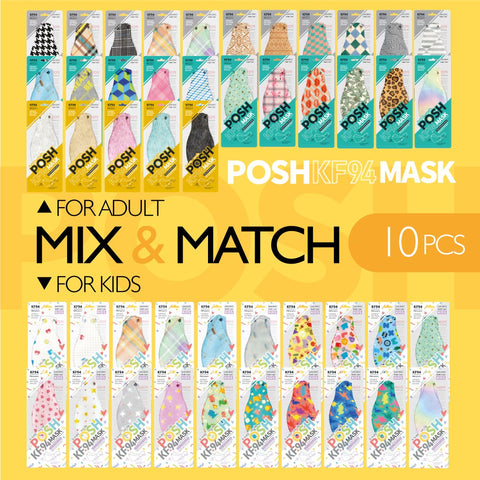
POSH KF94 Masks
POSH KF94 Masks combine outstanding filtration with premium comfort and stylish designs. Their soft inner lining, lightweight construction, and ergonomic 3D shape make them an excellent choice for extended wear throughout the day.
Features
- Certified Korean KF94 filtration
- Comfortable 3D design
- Soft inner material
- Excellent breathability
- Available in multiple colors and patterns
- Great for daily commuting, travel, and seasonal air quality concerns
BLUE KF94 Masks
BLUE KF94 Masks are known for their consistent quality, secure fit, and exceptional comfort. Available in multiple sizes for adults and children, they are a popular choice for families seeking reliable everyday respiratory protection.
Features
- Korean-made KF94 filtration
- Multiple size options
- Comfortable ear loops
- Lightweight for extended wear
- Excellent fit for everyday use
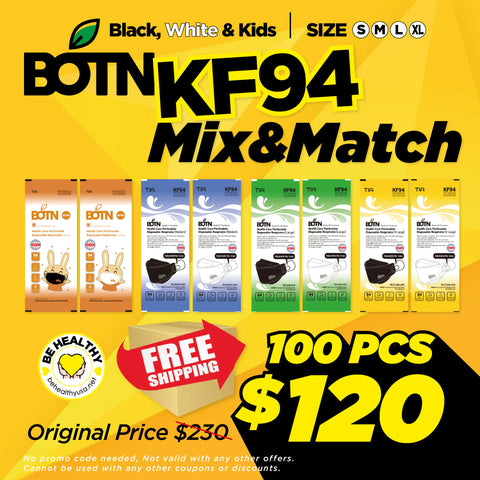
BOTN KF94 Masks
BOTN is one of Korea's best-known premium KF94 mask brands. Its adjustable ear loops provide a customizable fit, helping create a better seal while maximizing comfort throughout the day.
Features
- Premium Korean KF94 mask
- Adjustable ear loops
- Comfortable 3D ergonomic design
- Multiple sizes available
- Excellent choice for those seeking a personalized fit
Stay Informed and Breathe Safely
Wildfire smoke can travel far beyond the location of the fire, and its impact may change rapidly. Even when there are no flames nearby, fine-particle pollution can still affect your lungs, heart, and overall well-being.
Checking your local Air Quality Index (AQI), improving indoor air quality with a HEPA air purifier, and wearing a properly fitted high-filtration mask when outdoor exposure cannot be avoided are simple steps that can help reduce your exposure to airborne particles.
By preparing ahead of time, you can help protect yourself and your family during wildfire smoke events, seasonal air pollution, and other periods of poor air quality.
Important Notice: This article is intended for general educational purposes only and should not be considered medical advice. Individuals with asthma, COPD, heart disease, or other underlying medical conditions should consult a healthcare provider regarding protective measures appropriate for their individual health needs.

